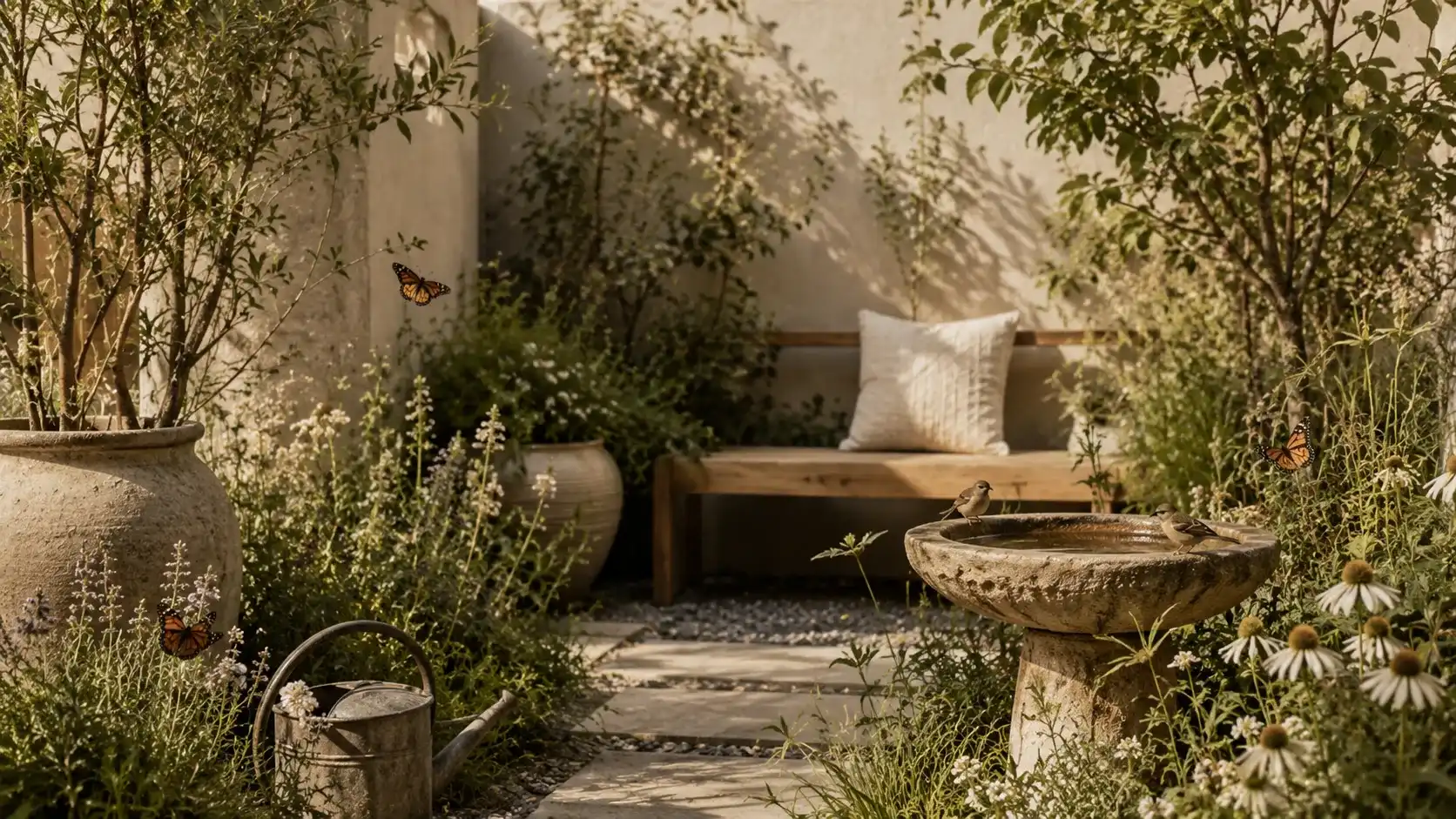
Learning how to attract wildlife to your yard begins with generosity, not complicated landscaping. Birds, bees, butterflies, and beneficial insects look for dependable resources. They need food. They need water. They need shelter. They need safety from harsh disturbance. Your yard can provide those essentials in simple, beautiful ways. Start with one corner that feels underused. Add resources you can maintain consistently. Then watch how visitors respond before expanding the plan. For a structured guide, keep Backyard Oasis: Wildlife at Your Doorstep close while you build.
Food sources should change with the seasons. Nectar supports bees and butterflies. Seeds feed finches and sparrows. Berries help birds through migration and winter. Leaves feed caterpillars that later feed nestlings. A native plant garden offers familiar food in reliable forms. Add a pollinator garden where sun stays strong. Use butterfly garden ideas to include nectar plants and host plants together. Avoid planting only for human color preferences. Wildlife responds when food fits its life cycle.
Plant diversity matters, but thoughtful repetition matters too. Groups of flowers are easier for insects to find. Repeated shrubs create rhythm for birds moving through cover. Different heights support different feeding habits. Choose some early bloomers. Add summer nectar. Keep autumn seed heads standing where possible. Include plants that produce fruit or seed naturally. Skip invasive species that spread beyond your yard. A balanced food plan looks attractive while serving real needs.
Water may be the feature that changes activity fastest. A simple dish can draw birds within days. Shallow edges help bees drink safely. Stones prevent insects from slipping below the surface. A water source for wildlife should stay fresh, visible, and easy to clean. Place it near shrubs, not exposed pavement. Add a small pond feature only if maintenance feels realistic. Refresh water often during heat. Keep mosquito control natural and responsible. Clean water turns occasional visitors into regular guests.
Shelter gives wildlife confidence to feed, drink, and nest. Dense shrubs protect songbirds from sudden danger. Tall grasses cover insects and small creatures. Logs support beetles, fungi, and hidden life. A bird-friendly landscape places cover near food and water. Choose native shrubs for birds along fences or quiet property edges. Keep some leaves beneath plantings through cold months. Place brush neatly where it will not bother neighbors. Safety should look intentional, not neglected. A protected visitor stays longer and returns more often.
Nesting needs deserve special care during busy seasons. Prune cautiously when birds are active. Watch shrubs before trimming. Keep pets away from dense cover. Avoid moving logs that may shelter insects. Leave soft plant fibers available when possible. Provide mud only where it will not create problems. Reduce sudden noise near nesting areas. Good shelter does not need to look wild everywhere. Strategic quiet zones often make the biggest difference.
Garden care shapes whether wildlife feels welcome or threatened. Harsh sprays can disrupt the insects birds need. Over-cleaning removes food and shelter. Constant noise scatters cautious visitors. Practice organic yard care wherever possible. Use a habitat garden checklist to decide what to leave, move, or replace. Rely on wildlife garden planning before making major changes. Build a nature-friendly outdoor space through patience instead of pressure. Gentle care protects the invisible relationships that make habitat work. Choose restraint.
Observation makes gentler care easier. Notice which flowers receive the most visits. Watch where birds disappear when startled. Track where water dries quickly. Record which plants struggle after heat. Move features based on evidence. Replace weak plants with stronger native options. Keep pathways usable so maintenance stays pleasant. Avoid changing everything in one weekend. Small adjustments let wildlife adapt. Your yard improves faster when you respond instead of guessing.
Seasonal planning prevents long gaps in usefulness. Spring needs pollen, nesting cover, and fresh water. Summer needs shade, nectar, and protection from heat. Autumn needs berries, seeds, and resting places. Winter needs stems, brush, evergreens, and unfrozen water when possible. A seasonal habitat plan helps you match care to each period. Review plant performance after every season. Add missing resources gradually. Revisit Backyard Oasis: Wildlife at Your Doorstep when you want planning support. A reliable yard becomes more valuable year after year.
Success grows when you keep watching and adjusting. Celebrate small signs of progress. One bee matters. One feather matters. One butterfly matters. Link this work with the habitat foundation article, the idea inspiration article, and the design planning article. Keep notes before buying more plants. Share observations with family members. Return to Backyard Oasis: Wildlife at Your Doorstep when you need a fresh checklist. Your yard becomes an invitation when food, water, shelter, and patience stay consistent. Start simply, then let life arrive.




Leave a comment