
A backyard wildlife habitat turns ordinary outdoor space into something generous, layered, and alive. Birds bring movement to quiet mornings. Bees bring purpose to blooming corners. Butterflies add color without asking for much. Small mammals visit when cover feels safe. Your yard does not need wilderness acreage to become useful. It needs thoughtful choices, reliable resources, and gentle care. Start with what already works in your landscape. Notice sun, shade, wind, soil, and drainage. Then shape each decision around comfort for visiting creatures. For a guided starting point, explore Backyard Oasis: Wildlife at Your Doorstep as a practical companion.
Good habitat begins with layers that mimic natural edges. Trees offer height for perching and protection. Shrubs create middle cover where birds can pause. Flowers feed small pollinators through changing weather. Ground plants protect soil, insects, and moisture. A native plant garden makes those layers stronger from the beginning. Add a bird-friendly landscape for shelter, perches, and nesting opportunities. Include a pollinator garden near sunny paths or patios. Every layer should serve food, safety, or seasonal cover. When those pieces connect, wildlife recognizes your yard as useful.
The most useful approach avoids tidy perfection. Nature prefers texture. A few open stems help insects. A loose leaf layer protects small life. Fallen twigs can become nesting material. Uneven edges create safer movement. Choose beauty that still leaves room for function. This mindset also reduces maintenance pressure. Instead of clearing every corner, guide the mess with intention. The result feels cared for while still supporting hidden activity.
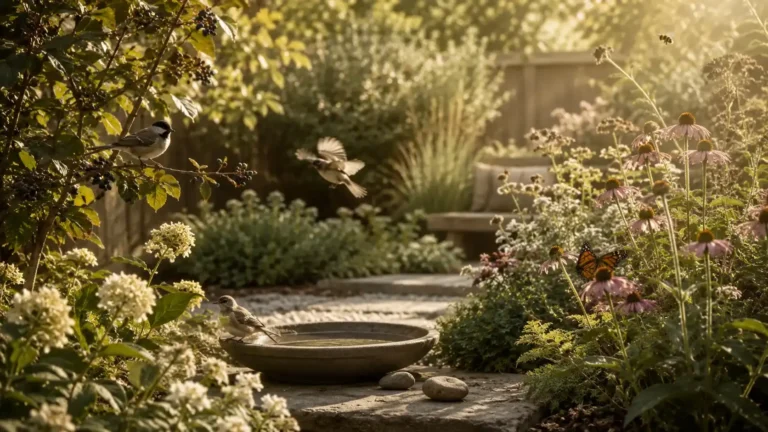
Plants create the foundation, but water completes the invitation. A shallow basin helps birds drink safely. Flat stones give insects secure landing places. Clean water matters more than decorative complexity. Shelter should feel close to food sources. Brush piles, logs, and dense shrubs all help. For colorful movement, study butterfly garden ideas before choosing flowers. A simple water source for wildlife can transform daily activity. Use organic yard care to protect fragile visitors from unnecessary stress. The best plan feels natural, steady, and welcoming, not overbuilt.
Small yards can still support remarkable activity when each choice works hard. Containers hold herbs, milkweed, and nectar flowers. Window boxes can feed bees during warm afternoons. A corner shrub can shelter wrens near a fence. Vertical trellises increase cover without stealing patio space. Choose plants with different bloom times. Place water where you can refresh it easily. Follow a habitat garden checklist when space feels limited. Use wildlife garden planning to prioritize essentials before buying anything. Compact design works best when every feature serves several purposes.
Patience matters in compact spaces because wildlife may need time to discover new resources. Place features where you can observe them easily. Keep pathways clear for your own comfort. Group containers so insects find flowers faster. Repeat plant colors to create stronger visual signals. Avoid crowding every empty area. Give roots room, air room, and visitors room. Small edits often outperform dramatic redesigns. Over time, the yard becomes easier to read. That clarity helps you improve without wasting money.
Wildlife returns when your yard feels predictable, calm, and safe. Keep water available during dry spells. Leave some seed heads through winter. Reduce nighttime glare near plant beds. Let leaves protect overwintering insects where they fall. Skip harsh chemical sprays whenever possible. Choose native shrubs for birds near quiet fences or property edges. Consider a small pond feature where drainage allows steady maintenance. Build a nature-friendly outdoor space gradually, not all at once. Daily comfort grows through small, consistent decisions that creatures learn to trust.
Quiet routines also protect the sense of refuge. Fill water at similar times when possible. Sweep patios without stripping every natural edge. Let some corners stay dense and undisturbed. Keep pets away from nesting shrubs during busy seasons. Store tools where they do not crush ground cover. Notice which activities scatter birds suddenly. Adjust paths, seating, and chores around those patterns. Your daily habits become part of the habitat. Gentle repetition makes the space feel safer.
Seasonal care keeps your yard useful beyond spring bloom. Early flowers feed emerging bees. Summer shade protects birds during heat. Autumn berries provide energy for migration. Winter stems shelter insects and seed eaters. A seasonal habitat plan helps you avoid rushed decisions when weather changes. Keep pruning gentle during nesting periods. Replace failed plants with stronger native choices. Review Backyard Oasis: Wildlife at Your Doorstep when your yard enters a new season. Consistency makes the space more dependable every year, especially when resources remain available.
Growth begins with observation, not perfection, because wildlife reveals what works. Watch which flowers attract the most visits. Notice where birds land before feeding. Track puddles after heavy rain. Move containers when sun patterns shift. Add one improvement each month, then study the response. For more inspiration, read the idea collection, the design approach, and the wildlife invitation plan. Return to Backyard Oasis: Wildlife at Your Doorstep whenever planning feels uncertain. Your yard can become a living refuge, one thoughtful choice at a time. Begin simply.



Leave a comment