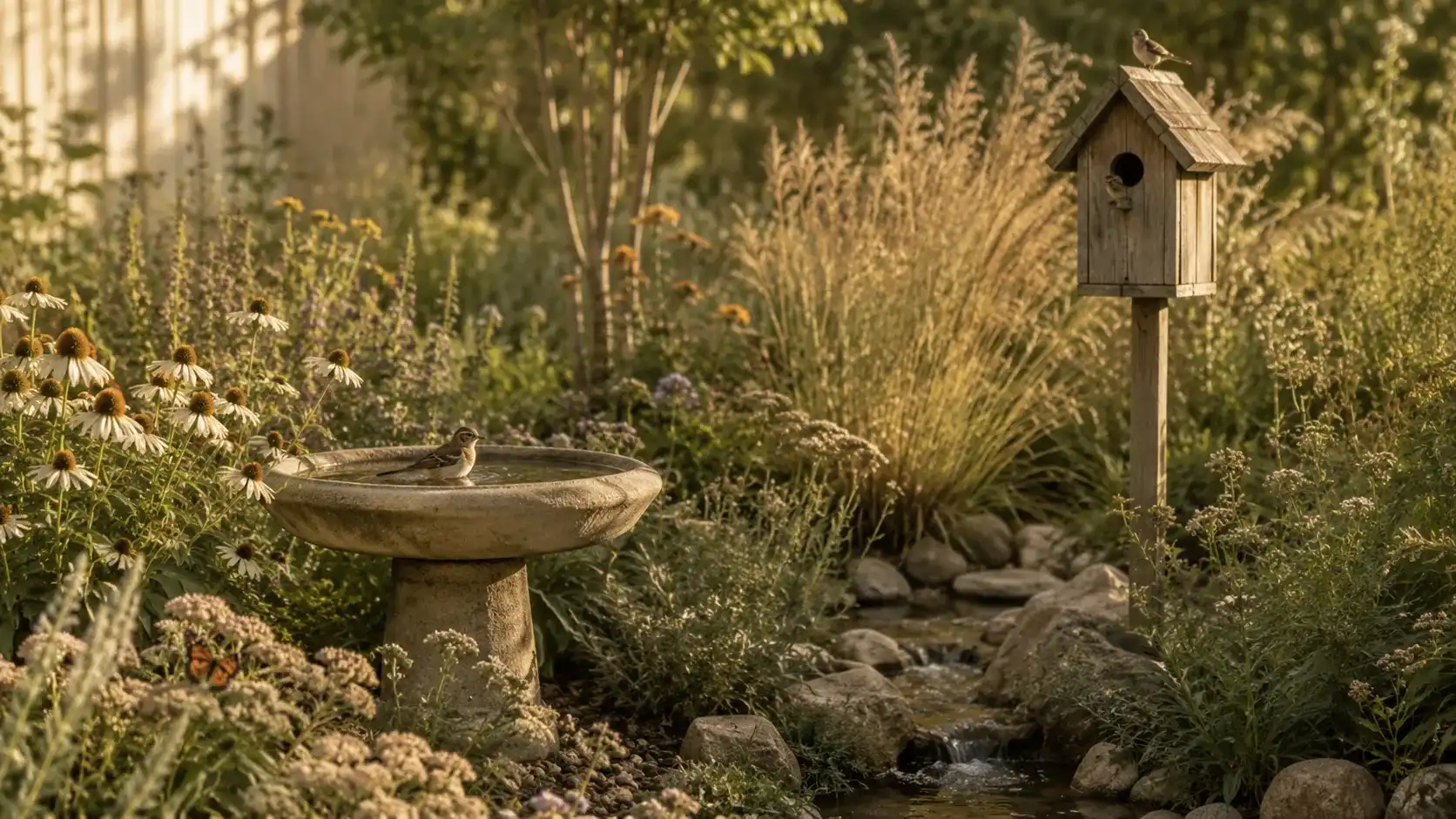
A backyard oasis design should feel peaceful for people and useful for nearby wildlife. The right plan balances beauty with shelter, food, water, and movement. It gives your family a restful place to sit. It gives birds safe places to pause. Bees find flowers. Butterflies find sun. Soil life finds protection. Start with a clear vision before buying features. Think about views from windows, doors, and seating areas. Then connect those views to living resources. Use Backyard Oasis: Wildlife at Your Doorstep when you want guidance that keeps the whole yard connected.
Layers make an outdoor room feel full without feeling crowded. Trees shape shade and frame the sky. Shrubs add privacy and shelter. Perennials bring color, scent, and seasonal food. Ground covers soften edges and protect soil. A native plant garden gives those layers real ecological value. Add a pollinator garden near sunny borders for constant motion. Use native shrubs for birds where you want privacy and habitat together. Repeat plant groups for visual calm. Living layers make the space feel designed, not random.
Good design also respects how people move through the yard. Keep paths simple and comfortable. Place seating where shade feels pleasant. Leave enough open space for daily life. Frame views with plants rather than blocking every sightline. Let flowers draw the eye toward special corners. Use texture to slow the experience. A quiet garden should invite lingering. Wildlife benefits when human traffic feels predictable. The same structure that calms people often helps animals feel safer.
A clear map prevents scattered purchases and crowded results. Sketch doors, fences, trees, drains, utilities, and existing beds. Mark sunny places that stay warm for hours. Note damp areas after rain. Identify noisy corners that need screening. A habitat garden checklist helps you sort needs before shopping. Add wildlife garden planning notes beside each zone. Keep your first version simple. The goal is direction, not perfection. Once the map shows patterns, the design decisions become easier.
Water brings life, sound, reflection, and daily activity into the space. A shallow dish can serve birds and insects. A water source for wildlife should stay clean and easy to refresh. Add stones so small visitors can land safely. Consider a small pond feature only when maintenance feels realistic. Place water near cover, not in the most exposed spot. Surround it with soft planting. Watch how birds approach before changing anything. Movement becomes part of the atmosphere. The yard feels calmer when life gathers naturally.
Sound matters as much as appearance. Rustling grasses soften traffic noise. Leaves catch breezes near sitting areas. Water can mask sharp neighborhood sounds. Birds add music when they feel secure. Bees create a quiet hum around flowers. Avoid loud pumps that dominate the mood. Choose features that invite listening rather than distraction. A restful space should reward attention. When design supports gentle sound, the whole yard feels deeper.
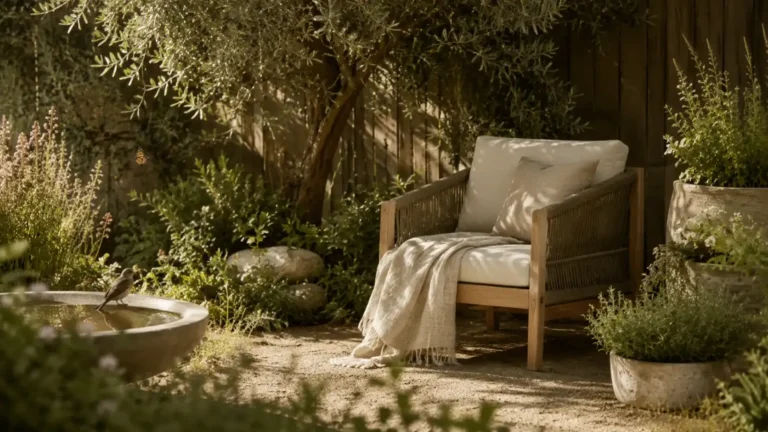
Comfort grows from shade, access, softness, and care. Add seating where you can watch activity without disturbing it. Use paths that let you maintain plants easily. Keep water close enough for routine cleaning. Build a bird-friendly landscape with cover near feeding plants. Explore butterfly garden ideas for sunny, sheltered spaces. Practice organic yard care so the refuge stays safe. Create a nature-friendly outdoor space that welcomes people and wildlife together. Useful design should feel relaxed. Every feature should earn its place.
Comfort also depends on restraint. Too many ornaments can confuse a small yard. Too many plant varieties can feel busy. Choose fewer materials and repeat them. Let plants provide most of the detail. Leave some open breathing room around seating. Make storage discreet. Keep tools away from delicate beds. Give children or pets clear zones for play. A balanced layout reduces conflict. That balance keeps the oasis easy to enjoy.
Seasonal thinking keeps the yard attractive after the first flush of flowers. Spring bulbs signal renewal. Summer leaves create shade. Autumn seed heads add texture. Winter branches hold structure against gray skies. A seasonal habitat plan helps beauty and usefulness continue together. Choose plants with staggered bloom times. Add berries for late-season interest. Leave some stems standing for insects and visual rhythm. Review Backyard Oasis: Wildlife at Your Doorstep before major seasonal changes. Strong design never depends on one perfect month.
The most satisfying yards evolve through attention. Notice where you sit most often. Watch which plants earn the most visits. Move features that feel inconvenient. Replace weak choices with stronger natives. Link your next reading with the habitat planning guide, the idea guide, and the wildlife invitation guide. Keep records before making expensive changes. Return to Backyard Oasis: Wildlife at Your Doorstep when you want a clearer path. Your oasis becomes richer when design listens to real life. Let each season teach the next step.

Leave a comment